epros®DrainLining
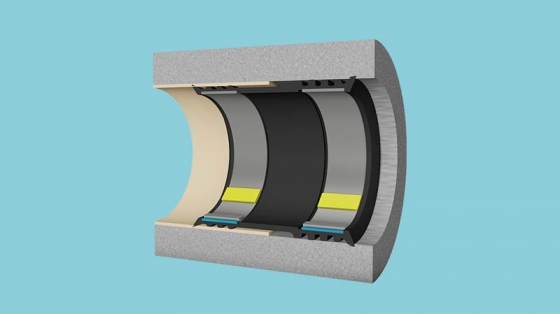
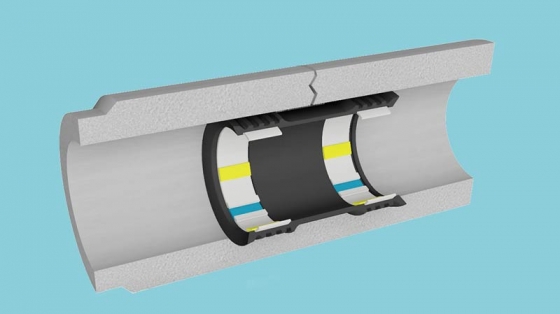
epros®DrainLining – advanced CIPP Lining with Liner End Cap
- Eco-friendly no-dig pipe renovation method
- Gives pipes another 50 years life
- Saving time, money and CO² emission
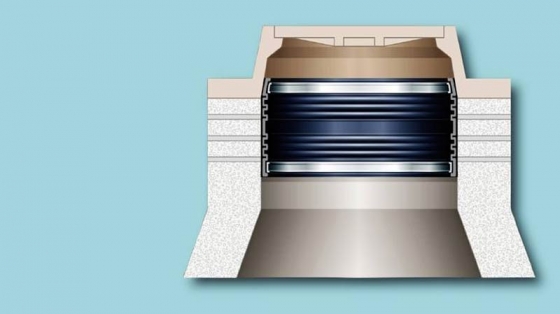
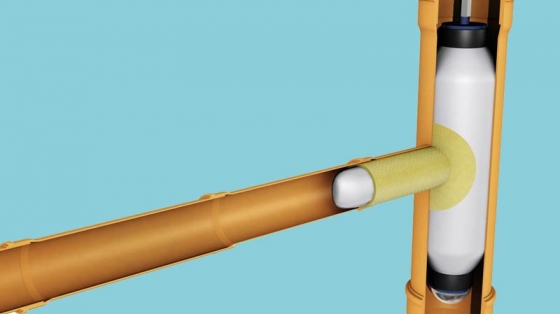
The epros®DrainLining method is a cured-in-place pipe lining (CIPP) process used in trenchless pipe and sewer rehabilitation ("no-dig" applications). The start or end point can be a manhole, inspection hole or cleaning eye or a open cut pipe. It is possible to install the liner along channel diversions or invert bends at an angle up to 90 degrees. The basic condition is that there is enough space to place the inversion fitting of the inversion unit or water rig.
Technically fully developed and proven in practice
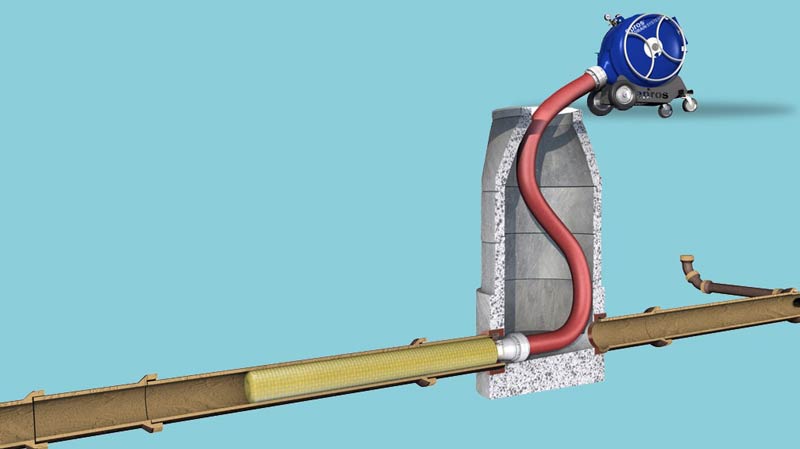
The rehabilitation of non-man-entry sewer lines with full-length CIPP liners has established itself as a sophisticated economical and technical alternative to traditional repair techniques involving digging up the ground.
This method is meanwhile a proven and reasonable-cost solution for the basic renovation of service lines in need of repair and thus to extend their service lives for another life cycle of at least 50 years.
A basic condition is that the materials used in CIPP operations are suitable for this type of application and that the installation process meets stringent quality criteria.
The inversion process
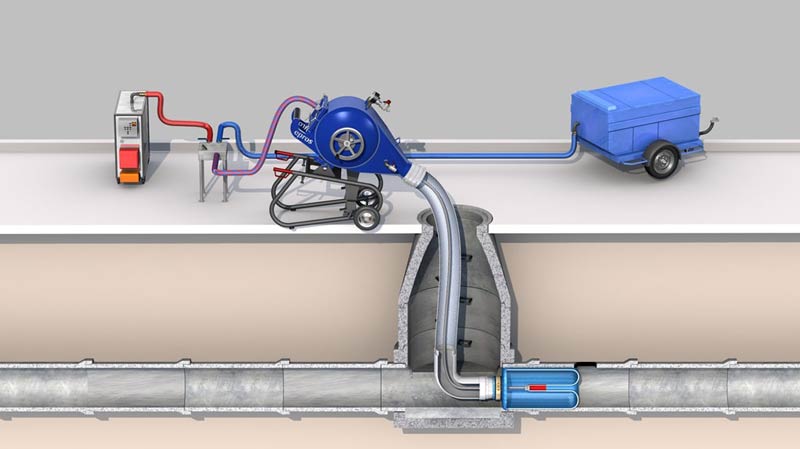
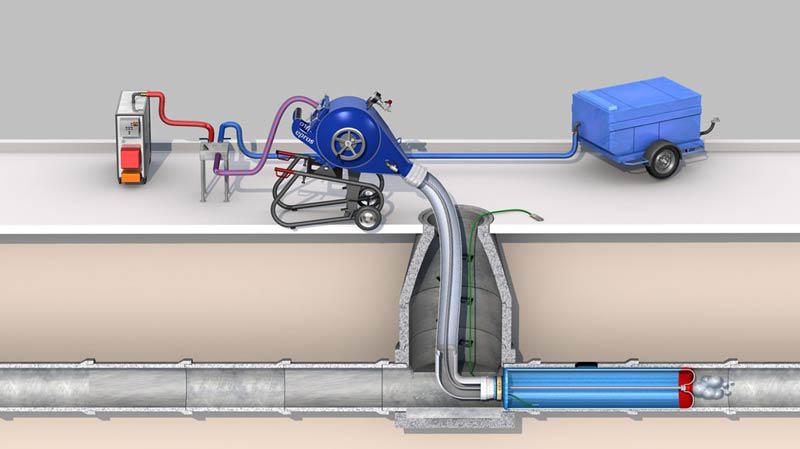
This process uses a flexible tube (= liner) of corrosion-proof synthetic and/or glass fibres, which is wetted inside with reaction resins and introduced into the host pipe run through a manhole, access pit or access eye with the help of an inversion unit.
During this process the liner tube is inverted, so the resin wetted liner side (inside before inversion) is turned outside, away from the effluent and forced against the pipe wall
The curing process
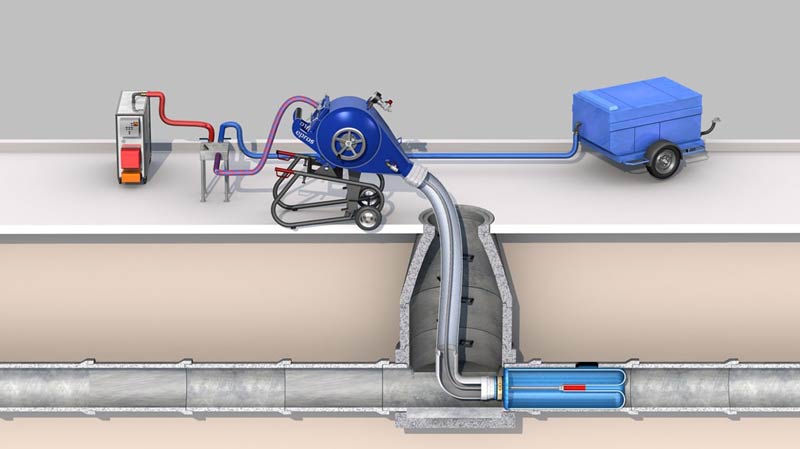
The resin wetted, inverted liner tube remains under pressure from the filled-in air of water until the resin is cured.
The resin-impregnated liner in the pipe section can be cured with hot water, steam or at ambient temperatures, depending on the requirements of the resin system used. The duration of the curing phase is largely dependent on the resin type and curing method you select.
The rehabilitation result
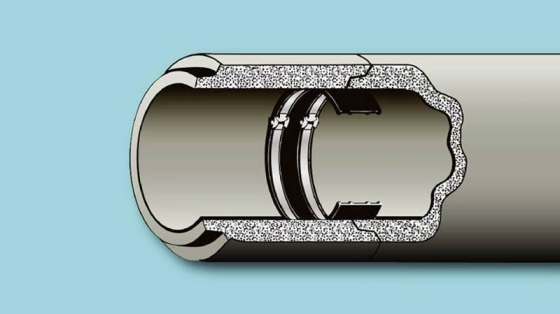
After final cure of the reaction resin, the liners form a tight positive and frictional fit with the host pipe wall.
The pipe-in-pipe system so obtained becomes an integral part of the host pipe. It forms a seal against infiltration and exfiltration, and fully restores and meets the structural and hydraulic requirements for the future. There is only a minor reduction in nominal pipe diameter.
Application Areas
Pipe run direction
Manhole to Manhole application
- From the start point to the end point
- From the start point to the end point by running through an intermediate manhole
- From the start point into a sewer pipe run over a defined length without any further manhole or access pit needed
- In case of laterals: either from a lateral start point down to the lateral/main interface or from a main line start point down to the main/lateral interface
Circular, egg-shaped and special sewer sizes
- concrete
- steel
- reinforced concrete
- clay
- fibrocement
- GRP, PVC, PE, PP
- cast iron
Precondition: The cross section of the host sewer meets the process requirements and the structural stability criteria.
Applicable Damages
- Leaks with or without groundwater infiltration or exfiltration at pipe joints, pipe walls, junctions, transitions etc.
- Displaced pipes, cracks and debris, ruptures
- Plugging of lateral connections no longer needed
- Mechanical wear
- Corrosion
Limitations
- Extreme pipe or joint offsets
- Broken or collapsed pipes
- Large cross-sectional reductions in conjunction with bedding problems
- Longitudinal cracks at pipe connections
Pipe Diameters
DN 30 - DN 1200 | 1,2" - 64"
Connection Angles
30° to 90°
Certificates
Technical Approvals, Patents, Quality Standards

International Standards
In conformance with worldwide standards
European Standards
In confirmance with European standards
Quality Management
DIN EN ISO 9001
Quality Management
DIN EN ISO 14001
External Quality Control
External Quality Control
External Quality Control
Downloads
Installation under difficult conditions
Case Study DrainLining method
Case Study DrainPlusLiner 2.0 - The one for all cases
Case study DrainPlus Liner 2.0